Final Coursework Sequence.

Preliminary Sequence.

Friday, March 26, 2010

Evaluation Question 1

In what ways does your media product use, develop or challenge forms and conventions of real media products?


Genre: What genre did we feel our movie would fall under? Thriller. A thriller is made to keep the audience on edge. It contains many twists and turns making the audience constantly ask questions - this can be unbearable for them.  


As shown above, the thriller genre has many sub-genres. 'The Safehouse' fits into the Crime-Thriller sub-genre.


We want our audience to have to examine the backstories and motivations of our main characters and to feel somewhat involved in the movie and to become immersed in it.


Examples of crime thrillers include:
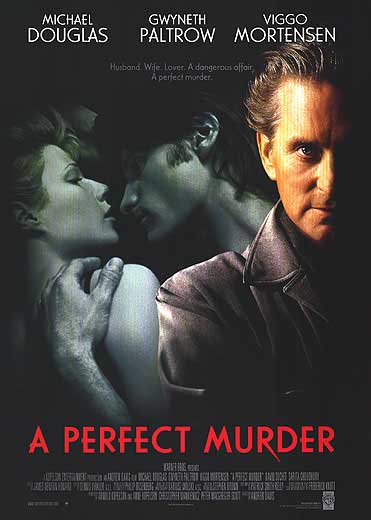
  • A Perfect Murder, Davis, 1998
  • Seven, Fincher, 1995

Both these films include typical characteristics of the crime-thriller genre - We have one clear 'goodie', 'baddie', dark scenes in shadow, tense music and the sequence increases in pace - these are common of thriller. 


Do we challenge conventional crime thrillers? Yes.

We have a female heroin and the whole movie is from her point of view, as opposed to from a male's point of view eg. Seven. 


We also cross-cut between the present and past events.

Narrative Structure: Conventionally, films have a closed narrative in which time is compressed. (Two hours constructs events happening over months or years) The opening tells us the WHO, WHAT and WHERE of the story and we usually see a series of events crucial the rest of the film's development. 

Typically, a film:
this is based on Todorov's theory.

A buildup to the event is shown through jumpier and shorter clips and the sequence is not shown in real time - we include flashbacks and crosscutting between the past and present.

The action code is clearly set up - the who (victim), the where (her flat), and then when. ("It was the 28th February 2010...")
The enigma code is also set up clearly as the audience wonder why our victim was chosen by the rapist. These follow Barthes' theory. 

Form: 

Our film does conform to these typical features of opening sequences, as demonstrated in the grid of screenshots below:

Comparing our opening sequence to that of 'Seven':


Despite the fact that Seven is of the same genre as The Safehouse, the opening sequence for it is very different. Yes, the main character is introduced but we never actually see his face and it's all alot more mysterious with far more ECU's. There's alot more detail too - however, like our opening sequence there's tense music in the background and titles are also included. 

Style: 

Music; Initially, the music is sad but it slowly changes to tense and dramatic with a loud ending when the attack happens. The dialogue is all straight to the point (eg. "I'm here to talk about my rape experience.") showing that our movie will be gritty and realistic. The pace increases building up to the attack.

Titles; 'typed' up as though an investigation piece is being written.


Use of Binary Opposites; 
Between the shots of Georgia talking to the camera and the flashbacks, we included lots of binary opposites through her clothing (tight to baggy), the lighting (dark to light) and the camerawork (jumpy to static):

Tuesday, March 16, 2010

Editing Week 2 - 15th March

Last week we managed to do alot on our opening sequence - we put all the clips in order, got our music sorted, did the titles and added sound effects to them.


We're aiming to get signed off by Wednesday morning, leaving the triple media lesson on Friday for any snagging etc.


We experimented with changing the order of the clips - instead of having just Georgia talking at the beginning, we tried alternating between clips of  her talking and clips of her walking and getting attacked. We compared the sequences and found we preferred the first and original order as the music fitted perfectly and we felt that the sequence 'flowed' alot better.


Finishing Touches: We need to do our production logo and include it at the beginning of our opening sequence. We also need to improve the title for 'The Safehouse.'

Tuesday, March 9, 2010

Editing Week 1 - 8th March...

So we've definitely finished shooting our footage - I'm really relieved, it was definitely the most stressful part of the whole coursework experience. Now editing is our priority and I'm feeling more confident that our final sequence will be a success. I'll update my blog from now on, writing down what the group managed to do:

Monday 8th: This was yesterday - we only had a single period to work on our sequences today. We captured some of the footage and had a session on the mac computer with Ryan - he showed us extra effects we could add to our sequences that Windows cannot do.

Tuesday 9th: Today was had two periods of media and half of lunch to edit. We finished capturing our footage and put alot of it together roughly, slowly forming our opening sequence. We had to make sure it had good continuity and we began to think about extra effects we wanted to add in the near future. This week will be an intensive editing week as next week, Despina will not be here due to the Geography field trip.

Tuesday, March 2, 2010

Thoughts so far...

I havn't blogged on my personal blog in a while - so far on the project, we've done our test shoot which was weeks ago. We used it mainly to experiment with shots and test out some ideas. It wasn't very successful in terms of creating a rough opening sequence but it did make us realise that we needed new actors and that we needed to uncomplicate the storyline a bit.


For the more final shoot, we did change our actors - we used Georgia as our victim and George as our rapist since his leg was better and he was able to do it. This was a really good decision. As well as this, we made our storyline less complicated - it's now just about a girl who was out partying and who gets attacked whilst going back into her flat. The simple storyline means we can focus more on the filming rather than explaining a long story in two minutes.


Our real shoot was the weekend that just passed (28th Feb) and it was definitely more successful than the test shoot in terms of acting and scripting. However we're still unhappy with some of the shots and we're going to do a final final shoot Wednesday evening between 6-9 to get the extra shots we want.

Thursday, January 28, 2010

Character Representation.

Having decided our final group idea, I've decided to research how our main characters (therapist, victim, rapist) have been represented in other movies.

Therapist:


1. [Analyze This, 1999] 

The therapist here is a caucasian male aged around his late 40s/early 50s. His costume is simple - he wears a plain white shirt and a plain black tie (although you can't see in it in this photo). He has facial hair and a receeding hairline, making him looks older.
He also wears glasses - these help him to look intelligent and experienced in his field.


2. [A Girl Thing, 2001]

Here, the therapist is a female rather than a male. However there are similarities between them - she is also middle aged (albeit slightly younger, perhaps in her early 40s) and she also dresses simply and professionally wearing a plain red shirt and a grey suit.

3. [Freaky Friday, 2003]    

Again, the therapist in Freaky Friday was a woman - she also seems to be a similar age to the two therapists above and like them, she's dressed very simply and professionally. When it comes to choosing the costume and overall look for the therapist in our film, we'll need to choose somebody who looks mature and we'll need to dress them in smart, professional and simple clothing.


Victim:

1. [The Accused, 1988]

Tuesday, January 26, 2010

Initial Ideas for Opening Sequences.

Initial Idea 1:


An opening sequence focused around a young man in his early twenties. He's just accidentally killed a man whilst driving carelessly - being too scared to contact the police, he drags the body miles away and tries to hide the evidence and cover his tracks. The opening sequences features ECU's on the man sweating, and clips where he's frantically washing his hands, his eyes twitch frantically around him etc. He looks extremely nervous and edgy and at the very end of the sequence we zoom out to see his car windscreen smashed and bloody. 
The rest of the movie would be about the sacrifices he has to make to avoid getting caught by the police, the run ins he has with them and how he struggles to live normally, constantly being paranoid and terrified. 

Looking at opening sequences.

Whilst browsing www.artofthetitle.com i came across many interesting opening title sequences. I realized that things such as font as extremely important as these smaller touches help establish the theme of the movie very early on, way before characters and dialogue are introduced.


Dexter opening title sequence:


After watching the Dexter title sequence, I thought it was really really good. The whole sequence is focused around one main character, Dexter, and his daily morning routine. Each shot slowly reveals more and more of the main character and the audience are lefting waiting to see what he actually looks like - a full body shot isn't shown until the very end of the sequence.


The theme is made extremely clear - Dexter is of the extreme thriller/horror genre. This is made clear from the very first shot which is of a spider being killed. The title that follows this says 'Dexter' and the words look as though they are written in blood, again emphasising the theme and making the colour red a main colour.


The majority of the shots are either ECU's and CU's of parts of either Dexter (eg. his stubble) or his routine (eg. bacon, eggs). Because of this, all of the shots look somewhat grotesque and graphic. A clear example of this is at 0:40 - 0:42 where a tiny drop of blood is magnified and takes over the entire shot. The shot that follows this is of Dexter cutting a slice of meat - because of the closeness of the shot, it's easy to make the mistake of thinking a surgeon is cutting open a human. This happens again many a time - at 1:02 as he cuts up his food, at 1:19 as he juices fruit etc.


In terms of lighting, there are plenty of shadows in the sequence and Dexter is often left partly in shadow himself, suggesting that there are two sides to him and that as well as being normal and having this 'routine,' there is a dark and more sinister side to him.

Dexter is finally revealed to us at 1:41 and despite the fact that he looks relatively normal, everything that we've just seen in the title sequence makes us think that there is much more to this character than what meets the eye. The sequence ends with Dexter casually walking out of his apartment and into the sunlight, playfully eyeing the camera - this suggests to the audience that the genre might not just be horror.

The opening credits are shown continuously throughout the sequence in capital white letters, tinted with shades of red. This makes the words bold and easy to read but at the same time, they don't majorly distract the attention away from what's going on in the shots.


The music throughout the sequence 'fits in' with the cuts and the action in the shots - it also softens the mood of the sequence and makes it seem slightly less grotesque and horror-like as it sounds like a ukelele/guitar was used for the music rather than more sinister sounding instruments eg. cello's. This shows the importance of finding good music for your title sequence - it can alter the mood of it, make it sound more professional etc.